
Jul 12, 2026 · By GoldenForge Team
Vacuum Casting vs. Centrifugal Casting: Which Is Right for Your Workshop?
Both methods fill a mold with molten metal, but they get there differently — and the difference matters more for some pieces than others.
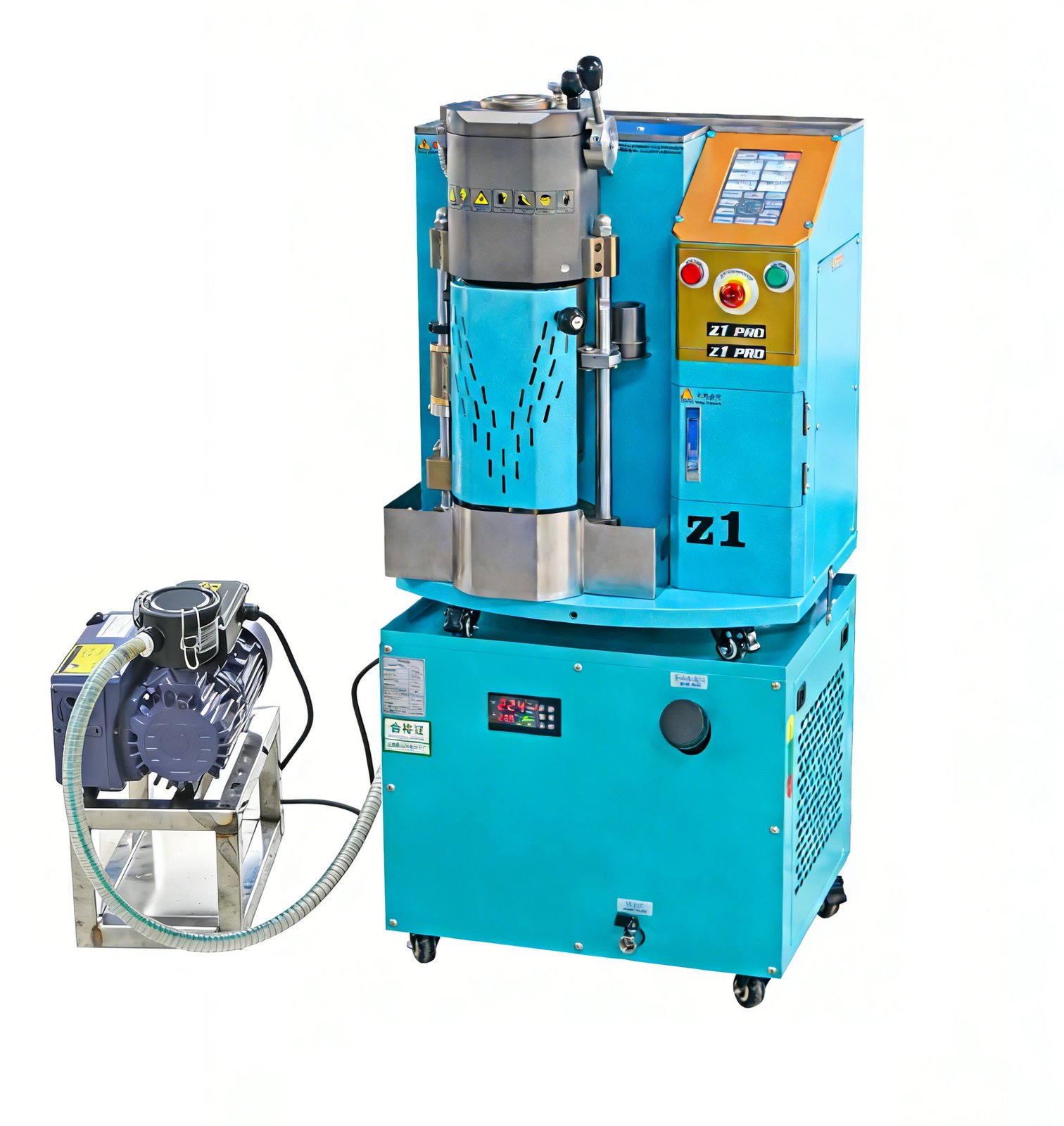
Vacuum casting and centrifugal casting solve the same basic problem — getting molten metal into every detail of a mold before it cools — but they solve it with different physics, and that difference shows up in the finished piece.
How each method works
Centrifugal casting spins the mold at speed, using centrifugal force to throw molten metal outward into the cavity. Vacuum casting instead pulls air out of the mold from below, drawing metal in through suction while simultaneously applying pressure from above. Our machines — from the compact Z1 up to the full-automation Z3 — use this vacuum-plus-pressure approach.
Where vacuum casting has the edge
- Fine detail and filigree — the combination of vacuum draw and pressure fill tends to reach thin, intricate cavities more reliably than spin force alone.
- Reduced porosity — pulling air out of the mold before metal enters reduces trapped air pockets, a common cause of porous castings.
- Repeatability — vacuum pressure is easier to standardize across operators and shifts than spin speed and timing, which matters for full-automation setups.
Where centrifugal casting still holds up
Centrifugal machines remain a straightforward, well-understood choice for simpler, heavier pieces and for workshops already trained on the method. The equipment is mechanically simpler, which can mean lower maintenance overhead for some shops.
Our take
For workshops producing detailed jewelry — rings with pavé settings, filigree, thin-walled pieces — vacuum casting's fill quality generally justifies the equipment investment. For heavier, simpler castings where fine detail isn't the priority, either method can work well. If you're not sure which fits your product mix, send us a few examples of what you cast most and we'll give you a straight answer, not just a sales pitch.